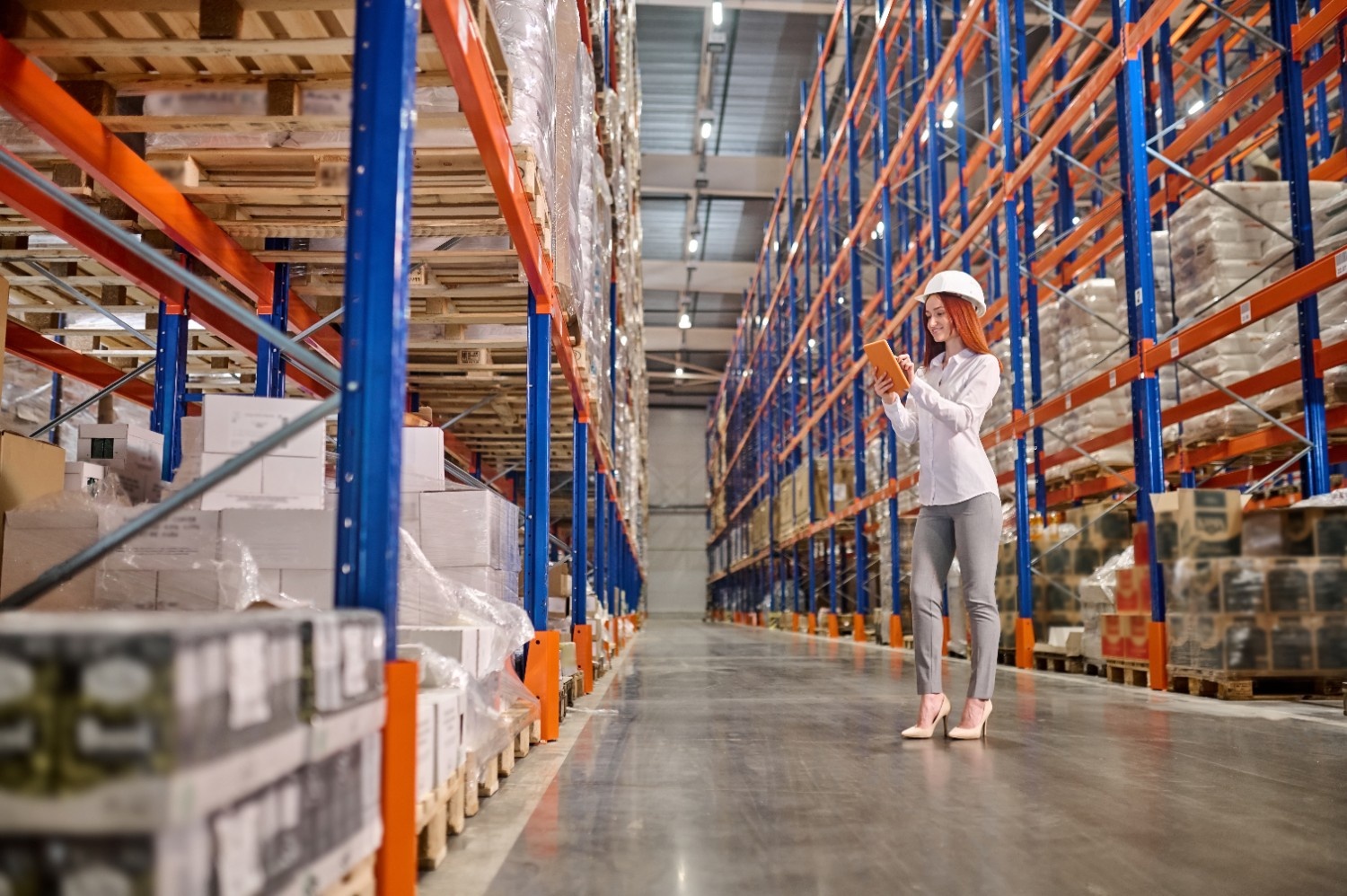
Warehouse Racking Solutions in Singapore for Efficient Storage
 By unipac 0 Comments
Efficient storage management is essential for businesses that handle large quantities of products, materials and industrial equipment. A well-organised warehouse makes it easier to manage inventory, access stored goods and maintain smooth daily operations. For companies operating manufacturing facilities, distribution centres and logistics warehouses, selecting the right Warehouse Rack Singapore solution can significantly improve the use of available space and overall workflow.
A properly planned warehouse storage arrangement allows businesses to organise products according to their dimensions, weight, handling requirements and frequency of use. From adjustable industrial shelving to heavy-duty storage structures, different racking configurations offer practical ways to maximise vertical space while maintaining convenient access to inventory.
Unipac Equipment PTE LTD provides customised industrial storage rack solutions in Singapore, including the design, manufacturing and installation of industrial shelving, adjustable racking, medium-duty racks and heavy-duty storage systems. The company also offers lifting equipment, including order pickers, pallet trucks, cranes and hoists, to support warehouse material-handling operations.
Understanding the available storage options, design considerations and essential components can help businesses create a more organised and functional warehouse environment.
Understanding Warehouse Racking Systems
Warehouse storage systems play an important role in keeping industrial facilities organised. Without an appropriate storage arrangement, products may occupy unnecessary floor space, inventory can become difficult to locate, and material-handling activities may take longer.
A professional warehouse racking singapore solution provides designated storage positions for different products and materials. By arranging goods vertically and horizontally, businesses can make better use of available warehouse space while keeping inventory organised.
A standard warehouse racking system generally consists of upright frames, horizontal beams, braces, shelves and supporting components. These elements work together to create a structure suitable for storing products of different sizes and weights.
Modern warehouse storage racks can be designed for different industrial applications, including palletised products, cartons, spare parts, packaged goods and manufacturing materials.
For businesses operating in Singapore, an appropriately configured warehouse racking system singapore can help improve storage organisation within existing industrial premises. The arrangement should consider the building layout, ceiling height, product dimensions and material-handling requirements.
Unipac Equipment PTE LTD offers industrial storage solutions that can be customised according to the specific requirements of warehouses, factories and other industrial facilities.
Different Types of Racks Used in Warehouses
Selecting the right storage structure starts with understanding the available configurations. Different products require different storage arrangements, depending on their weight, dimensions, accessibility and handling methods.
Here are some commonly used types of racks in warehouse environments.
1. Heavy-Duty Pallet Racking
Heavy-duty pallet racking is commonly used in facilities that store large quantities of palletised products. It provides organised storage positions that can be accessed using forklifts and other suitable lifting equipment.
A properly planned warehouse heavy duty racking arrangement can accommodate demanding industrial storage applications when the structure is correctly specified for the intended loads.
Businesses handling bulky inventory, raw materials and finished products may benefit from heavy duty racks for warehouse operations.
The rack configuration should consider pallet dimensions, load distribution, beam specifications and forklift accessibility. Clear loading arrangements and appropriate aisle space are also important for maintaining an organised working environment.
2. Medium-Duty Storage Racks
Medium-duty storage racks are suitable for warehouses that handle cartons, packaged products, industrial components and moderately heavy materials.
These systems provide organised shelving levels for products that require regular access. They can be configured according to the height and dimensions of the stored inventory.
Medium-duty arrangements are particularly useful in manufacturing facilities, workshops and distribution centres where different products need to be stored in designated locations.
3. Adjustable Industrial Shelving
Adjustable shelving provides flexibility when storage requirements change. Shelf heights can be modified to accommodate different products, making these systems suitable for facilities managing varied inventory.
Businesses looking for warehouse shelving racks can consider adjustable configurations for tools, spare parts, packaged products and smaller industrial components.
A suitable warehouse rack and shelf arrangement can also combine different shelving levels to support multiple inventory categories within one facility.
4. Custom Industrial Storage Racks
Some industrial products have unusual dimensions or handling requirements that cannot be accommodated by standard shelving configurations.
Custom-built storage structures can be designed around the specific application. Depending on the requirements, these may include folding columns, removable columns, straps and casters.
Such flexibility allows businesses to develop a warehouse racking design that accommodates specialised products and supports their operational processes.
Unipac Equipment PTE LTD offers customised industrial storage rack manufacturing, with dimensions and configurations developed according to customer requirements.
Important Considerations for Warehouse Racking Design
An effective storage installation begins with understanding how the warehouse operates. Businesses should evaluate the building layout, inventory characteristics, equipment movement and storage capacity before finalising a configuration.
A practical rack design for warehouse applications should balance storage utilisation, accessibility and operational safety.
Assess the Available Warehouse Space
The first step is to measure the available floor area and ceiling height. Businesses should identify structural columns, doorways, loading areas, emergency exits and existing equipment that may influence the rack arrangement.
A suitable warehouse racking system design should make effective use of vertical space while maintaining sufficient clearance for employees and material-handling equipment.
Forklift routes, pedestrian pathways and access to frequently used storage positions should be considered during the planning process.
Understand Product Dimensions and Weight
The dimensions and weight of stored products directly influence the type of storage structure required.
For example, large palletised goods may require a different arrangement from smaller cartons or individual components.
Businesses should identify the maximum intended load for each storage level and select components that are appropriate for those requirements.
Plan Inventory Accessibility
Products should be arranged according to their retrieval frequency and handling requirements.
Frequently accessed items can be placed in convenient storage positions, while less frequently retrieved materials can be assigned to suitable secondary locations.
This approach supports smoother picking operations and reduces unnecessary movement within the warehouse.
Consider Future Storage Requirements
Warehouse inventory and operational requirements can change over time. A flexible storage arrangement can make it easier to accommodate new product categories and changing stock volumes.
Adjustable shelving and modular components can provide useful flexibility when planning long-term storage arrangements.
Understanding Warehouse Racking Sizes and Dimensions
Selecting appropriate measurements is essential when planning an industrial storage installation. The structure must accommodate the stored products while fitting within the available building space.
Businesses should evaluate warehouse racking sizes according to inventory characteristics, handling equipment and the intended storage configuration.
Important measurements include:
- Rack height: Determines the available vertical storage space.
- Rack width: Influences the number of products or pallets that can be accommodated across a storage level.
- Rack depth: Should correspond with the dimensions of the stored materials or pallets.
- Beam length: Determines the horizontal distance between supporting upright frames.
- Shelf spacing: Provides suitable clearance for products of different heights.
- Aisle width: Allows employees and handling equipment to move safely around the storage installation.
The correct warehouse racking dimensions should also consider floor conditions, ceiling restrictions, building obstructions and the operating requirements of lifting equipment.
For example, a facility using forklifts may require a different aisle configuration from a warehouse where employees retrieve products manually.
Unipac Equipment PTE LTD can customise the length, breadth and height of industrial storage racks according to specific customer requirements and intended applications.
Essential Components and Accessories of Industrial Storage Racks
Industrial storage structures consist of several components that work together to support stored materials and maintain structural stability.
Understanding these components helps businesses plan suitable installations and maintain their equipment.
Upright Frames and Columns
Upright frames form the vertical supporting structure of a storage rack. They generally consist of columns connected through horizontal and diagonal braces.
The configuration must be appropriate for the intended storage height and loading arrangement.
Horizontal Beams
Beams connect upright frames and provide support for shelves or stored products. Their length and specifications influence the available storage positions.
Bracing and Base Plates
Horizontal and diagonal braces help maintain structural stability. Base plates connect the upright frames to the floor anchoring arrangement.
Wire Decking and Mesh Panels
Wire decking and mesh panels can provide additional support for stored products and create practical shelf surfaces.
Warehouse Racking Accessories
Selecting suitable warehouse racking accessories can improve the functionality of an industrial storage installation.
Depending on the application, accessories may include:
- Wire mesh decking
- Row spacers
- Upright protectors
- Shelf supports
- Horizontal and diagonal braces
- Safety barriers
- Anchoring components
- Protective guards
Warehouse Rack Guards
Warehouse rack guards help protect vulnerable rack sections from accidental contact with forklifts and other material-handling equipment.
They are particularly useful around upright columns, aisle ends and areas where handling machinery operates frequently.
Protective components should be selected according to the rack configuration and warehouse layout. Their placement should also maintain convenient access for normal material movement.
Warehouse Racking Standards and Safety Requirements
Workplace safety should remain a priority throughout the design, installation and operation of industrial storage systems.
Businesses planning warehouse racking standards should consider applicable Singapore workplace safety requirements, relevant engineering specifications, manufacturer instructions and the intended operating conditions.
Important considerations include:
Load capacity: Every storage level should be suitable for its intended load. Maximum loading information should be communicated clearly to warehouse personnel.
Structural stability: Upright frames, beams, braces and connections should be appropriate for the proposed rack configuration.
Floor conditions: The installation surface should be assessed for its suitability for the proposed structure and anchoring arrangement.
Equipment movement: Forklift routes and pedestrian pathways should be planned to reduce accidental contact with storage structures.
Regular inspections: Racks should be inspected for visible damage, deformation, loose connections and other signs of deterioration.
Employee awareness: Warehouse personnel should understand safe loading practices and follow the designated storage arrangement.
Unipac’s product information highlights the use of finite element analysis (FEA) testing to assess structural load stresses and help reduce the risk of structural failure.
The company also states that its supplied lifting machines must be provided with the relevant Ministry of Manpower (MOM) safety certification, with after-sales service available to support maintenance and safety requirements.
Businesses should ensure that their storage installations and lifting equipment meet the requirements applicable to their particular operations.
New and Used Warehouse Storage Options
Businesses planning a storage installation may consider new industrial equipment or evaluate previously used systems. Both options require careful consideration of structural condition, component compatibility and application suitability.
Used Warehouse Racking
Some businesses explore used warehouse racking when looking to modify an existing storage arrangement or introduce additional shelving.
Before using previously installed equipment, the upright frames, beams, connectors, braces and base plates should be inspected for damage or deformation.
Original specifications and available load information should also be checked before installation.
Second-Hand Warehouse Racking
Warehouse racking second hand equipment can vary considerably in condition, dimensions and component compatibility.
Businesses should verify that the individual components belong to a compatible system and are suitable for the intended application.
Mixing incompatible beams, frames and connectors can create structural problems. A proper inspection and professional installation assessment are important before putting any second-hand system into operation.
New Industrial Storage Racks
New systems provide flexibility when planning a customised warehouse layout. Businesses can specify the required dimensions, shelf arrangements, structural components and accessories according to their operational needs.
Companies searching for warehouse racking for sale should evaluate the product specifications, construction materials, intended load capacity and customisation options.
The selected storage arrangement should correspond with the actual inventory and handling requirements of the facility.
Applications of Industrial Warehouse Storage Solutions
Industrial storage systems are used across many sectors because businesses in different industries require organised and accessible inventory management.
Suitable warehouse racking solutions can support applications such as:
Manufacturing facilities: Organised storage for raw materials, production components, machinery parts and finished products.
Logistics and distribution centres: Designated storage positions for palletised goods, cartons and packaged inventory.
Automotive businesses: Storage for spare parts, tools, vehicle components and maintenance supplies.
Construction companies: Organised storage for building materials, industrial hardware and equipment.
Food and beverage facilities: Storage for packaged products and related materials, subject to applicable hygiene and handling requirements.
Healthcare and pharmaceutical facilities: Organised storage for supplies and packaged products in accordance with relevant storage requirements.
Retail and textile operations: Storage for merchandise, fabrics, cartons and finished products.
The appropriate configuration depends on the characteristics of the stored goods, the facility layout and the required material-handling processes.
Integrating Lifting Equipment with Warehouse Storage Systems
Storage racks are only one part of an efficient warehouse operation. Businesses also need appropriate equipment to move materials between receiving areas, storage positions and dispatch sections.
Integrating suitable lifting machinery with a storage installation can support smoother warehouse operations.
Depending on the application, businesses may require:
- Order pickers: For accessing inventory stored at elevated positions.
- Pallet trucks: For moving palletised goods across warehouse floors.
- Hydraulic lifters and stackers: For lifting and positioning materials.
- Forklifts: For transporting and handling suitable industrial loads.
- Cranes and hoists: For specialised lifting applications involving heavy materials.
The relationship between storage structures and handling equipment should be considered during the planning stage.
For example, the warehouse racking system design should accommodate the reach, operating height and movement requirements of the selected lifting machinery.
Similarly, a heavy-duty storage arrangement should be specified according to the intended loads and operating conditions.
Unipac Equipment PTE LTD provides industrial storage racks alongside lifting equipment, including order pickers, pallet trucks, cranes and hoists. This allows businesses to consider storage and material movement as connected parts of their warehouse operations.
Finding Warehouse Racking Suppliers in Singapore
When searching online for warehouse racking near me, businesses should consider suppliers that understand industrial storage applications and can provide guidance on rack specifications, customisation and installation requirements.
Before selecting a supplier, businesses should identify their warehouse dimensions, product characteristics, required storage capacity and material-handling arrangements.
Companies exploring industrial storage options should also review available product configurations, construction materials and customisation capabilities.
For facilities requiring specialised storage structures, working with a supplier experienced in industrial rack design and manufacturing can help simplify the planning process.
Unipac Equipment PTE LTD provides customised industrial storage racks in Singapore, including adjustable shelving, medium-duty racks and heavy-duty storage configurations.
The company also offers supporting lifting equipment for applications that require additional material-handling capabilities.
Create an Organised Warehouse with Unipac Equipment PTE LTD
A well-organised warehouse supports better inventory management, convenient product access and more efficient daily operations. Selecting the right Warehouse Rack Singapore solution requires careful attention to storage capacity, product dimensions, structural specifications and workplace safety.
From adjustable industrial shelving to heavy-duty storage configurations, each facility requires an arrangement that reflects its actual operational requirements.
A properly planned warehouse racking installation can help businesses make better use of vertical space while maintaining an organised and accessible storage environment.
Whether your facility requires customised industrial shelving, medium-duty storage racks or specialised heavy-duty structures, the planning process should begin with a clear understanding of your inventory and material-handling needs.
Unipac Equipment PTE LTD offers industrial storage rack design, customisation, manufacturing and installation services in Singapore. Its range includes adjustable shelving, medium-duty racks, heavy-duty storage systems and customised industrial solutions.
With suitable storage structures and supporting lifting equipment, businesses can develop a warehouse environment that supports organised inventory management and efficient material handling.
Explore Unipac’s industrial storage rack solutions and discuss your warehouse requirements with the team.
For reliable and high-quality Warehouse Rack Singapore solutions, Contact Unipac Equipment PTE LTD today to explore our range of warehouse storage systems and professional services tailored to your business needs