How to Select the Right Overhead Crane for Industrial Material Handling
 By unipac 0 Comments
Moving heavy materials around a factory, warehouse, workshop, or production facility can become challenging when the available handling equipment does not match the work. Large machinery parts, raw materials, fabricated components, and finished products may need to be lifted and transferred regularly, often across the same working area. Relying on manual handling or unsuitable equipment can make these tasks slower and more difficult to manage.
An overhead crane provides a practical way to lift and move loads through a designated area while keeping the floor space available for other activities. Instead of moving heavy materials entirely at floor level, the load can be raised and transported along an overhead path. This can be particularly useful in facilities where heavy lifting is part of the regular workflow.
Selecting the right system requires more than looking at the maximum load capacity. The crane needs to suit the building layout, lifting height, span, travel distance, operating frequency, available headroom, and the type of materials being handled. Working with experienced Overhead Crane Manufacturers can help businesses evaluate these factors before deciding on a suitable lifting arrangement.
Understanding Overhead Crane Systems
An overhead crane is a lifting system designed to move loads vertically and horizontally within a defined working area. Depending on the design, the crane may travel along elevated runways or use a supporting structure that allows the equipment to move across the required space.
A typical system may include a bridge or supporting structure, hoist, trolley, runway components, controls, and lifting accessories. Each part contributes to the movement and positioning of the load.
The main advantage of an overhead arrangement is that it uses space above the working floor. This can leave more room for machinery, storage, vehicles, workstations, and personnel at ground level. For facilities where floor space is already heavily used, making better use of overhead space can be an important consideration.
The crane should still be selected according to the actual application. A system used to move machinery within a manufacturing plant may have very different requirements from one used for occasional maintenance work. The weight and dimensions of the load, how frequently it is lifted, and how far it needs to travel all influence the appropriate configuration.
Different Types of Cranes for Industrial Applications
Industrial facilities do not all have the same lifting requirements. Different crane designs are available to accommodate variations in working space, load movement, installation conditions, and operating needs.
Overhead Travelling Cranes
Overhead travelling cranes are designed to move loads across a defined working area. They can be useful in manufacturing plants, workshops, warehouses, and other facilities where materials need to be transferred between different points.
The crane travels along a designated path while the hoist raises or lowers the load. This combination allows operators to position heavy items more systematically than would be possible through manual movement alone.
They can be particularly useful when the same lifting and travelling route is used repeatedly as part of a production or handling process.
Bridge Cranes
Bridge cranes use a bridge structure that travels along supporting runways. The hoisting equipment moves along the bridge, allowing loads to be positioned within the crane’s operating area.
This arrangement can provide broad coverage across a production or storage space without requiring floor-mounted lifting equipment throughout the facility. Bridge cranes may therefore be considered where businesses need to move heavy materials across a relatively large working zone.
The final configuration depends on the building structure, required span, load characteristics, lifting height, and operating conditions.
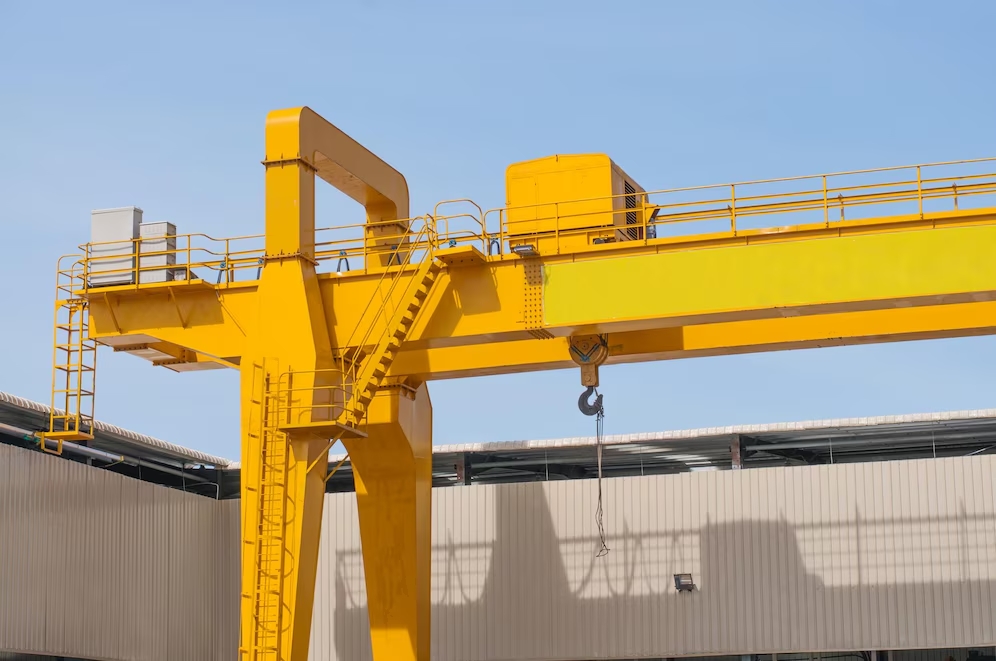
Gantry Cranes
Gantry cranes are supported by legs rather than relying entirely on an elevated building structure. Depending on the design, they can be used in indoor or outdoor environments and may be suitable for applications where an independent supporting structure is preferred.
They can be useful for handling large components, machinery, fabricated materials, and other heavy loads. The available working area and required load movement should be considered before deciding whether a gantry arrangement is appropriate.
Jib Cranes
Jib cranes are generally suited to more focused lifting applications. Rather than covering a large facility, they can serve a particular workstation, production area, assembly point, or maintenance location.
Their arrangement allows loads to be lifted and positioned within a defined radius. This can be useful when materials need to be moved between nearby points without requiring a full crane system across an entire building.
Mobile and Floor Cranes
Mobile and floor cranes provide another approach to material handling where floor-level movement or greater equipment flexibility is required. They can be considered for workshops, maintenance areas, production environments, and other applications where a fixed overhead system may not be suitable.
The appropriate equipment should always be determined by the nature of the work, the available space, and the way materials need to be moved.
Key Factors to Consider Before Selecting a Crane
Choosing lifting equipment starts with understanding the job it needs to perform. A crane should be selected around the application rather than simply choosing the highest available lifting capacity.
Load Capacity
The maximum weight of the materials being lifted is one of the first factors to establish. The crane and hoist should be suitable for the loads expected during normal operation.
It is also important to consider whether loads vary considerably. A facility handling both lighter components and substantially heavier machinery may need a system designed around its actual range of applications.
Lifting Height
Determine how high the load needs to be raised during normal operation. The required lifting height should be considered alongside the building’s available headroom.
Lighting, ventilation systems, roof structures, machinery, pipes, and other installations can affect the available vertical space. Understanding these restrictions before installation can help avoid operational limitations later.
Span and Travel Distance
The crane span determines the width of the area that the equipment can serve, while the travel distance determines how far it needs to move along its runway or supporting arrangement.
For example, a crane serving one workstation may require a relatively limited travel range, while a manufacturing facility may need to transfer loads across several production areas.
Operating Frequency
How often the crane will be used is another important consideration. Equipment used occasionally for maintenance may have different requirements from a crane operating repeatedly throughout a production shift.
Businesses should consider the expected lifting cycle, working hours, frequency of movement, and type of loads being handled when discussing equipment specifications with Overhead Crane Manufacturers.
Available Headroom
Headroom can have a major influence on crane selection. The available space between the building’s structural elements and the required lifting position needs to accommodate the crane, hoist, trolley, and load.
A detailed assessment of the installation area can help identify potential restrictions before equipment is installed.
Operating Environment
The working environment should also be considered. Indoor manufacturing areas, warehouses, workshops, and outdoor facilities can have different requirements.
Factors such as dust, moisture, temperature, chemicals, exposure to the elements, and surrounding machinery may influence equipment selection and maintenance requirements.
Power and Control Requirements
The crane’s power supply and control arrangement should match the facility and intended operation. Depending on the system, operators may use pendant controls, remote controls, or other control arrangements.
The choice should provide suitable control of lifting, lowering, travelling, and positioning while fitting the operational requirements of the facility.
Using Overhead Cranes to Improve Material Handling
When heavy materials need to be moved repeatedly, having a dedicated lifting system can make the workflow easier to organize. Instead of arranging separate floor-level handling methods for every movement, a crane can provide a defined lifting route across the work area.
For example, a manufacturing facility may need to move heavy components from a storage section to an assembly station. A suitable crane can lift the component, move it across the designated area, and position it at the required location.
In a workshop, the same principle can be applied to machinery parts or equipment being moved for maintenance. In a warehouse or industrial facility, the crane may support the movement of bulky materials that are difficult to handle manually.
The goal of an overhead crane is not only to make load movement quicker but also to create a more organized and controlled handling process. By using suitable lifting equipment for heavy or bulky materials, businesses can reduce unnecessary manual handling and make routine movement easier to manage. Unipac Equipement Pvt Ltd provides lifting solutions designed to support different industrial material-handling requirements while fitting the practical needs of the workplace.
Planning the Installation Area
The installation area should be assessed before selecting the final crane configuration. The available space, building structure, load path, access points, and surrounding equipment can all influence the installation.
Businesses should consider where the crane will operate, where loads will be picked up, and where they will be placed after lifting. The intended travel path should remain clear enough for safe operation.
The supporting structure also needs to be appropriate for the selected system. Depending on the crane type, this may involve existing building structures, runways, columns, floor-supported legs, or other structural arrangements.
Installation planning should also consider access for inspection and maintenance. Equipment that is difficult to access can make routine servicing more complicated.
This is one reason it can be useful to involve Overhead Crane Manufacturers during the planning stage. A technical assessment can help determine whether the proposed crane configuration fits the facility rather than trying to adapt the working area after installation.
Safety Considerations During Crane Operation
Heavy lifting requires appropriate operating procedures. The crane should be used only within its intended specifications, and operators should understand the controls and limitations of the equipment.
Loads should be properly secured before lifting, and the lifting area should be kept clear of unnecessary personnel. Operators should also avoid situations where people could be exposed to suspended loads.
Regular inspections can help identify visible wear, damaged components, unusual noises, or other issues that may require attention. Depending on the equipment and applicable requirements, components such as hooks, ropes, chains, brakes, wheels, controls, and lifting mechanisms may require inspection or servicing.
Operators and maintenance personnel should follow the manufacturer’s recommendations as well as applicable workplace safety requirements.
For businesses operating in Singapore, regulatory and certification requirements should also be considered. Unipac’s crane range is designed with Singapore’s Ministry of Manpower requirements in mind, and the company provides safety certification and services such as periodic load testing where applicable.
The exact requirements can depend on the type of lifting equipment and its use, so businesses should confirm the relevant requirements for their specific installation.
Maintenance and Long-Term Reliability
Regular maintenance is an important part of managing lifting equipment. A crane may perform many lifting cycles during its working life, and components can experience normal wear as the equipment is used.
Maintenance schedules should be based on the manufacturer’s recommendations, operating conditions, frequency of use, and applicable requirements.
Keeping inspection and maintenance records can also make it easier to monitor the condition of the equipment. If unusual movement, noise, vibration, or other changes are noticed during operation, the equipment should be assessed before continuing normal use.
Planning maintenance access during the initial installation can make these tasks easier later. It is therefore worth considering servicing requirements when selecting the crane rather than treating maintenance as an afterthought.
Applications Across Industrial Sectors
Overhead lifting systems can be used in many environments because the need to move heavy materials exists across different industries.
In manufacturing, cranes can assist with moving raw materials, machinery parts, fabricated components, and assemblies between production areas.
In warehousing, lifting equipment can support the handling of large or heavy products that are not practical to move manually.
In engineering workshops, cranes can be used when machinery or heavy components need to be positioned for assembly, servicing, or repair.
In construction and fabrication, lifting systems can assist with handling structural components and other heavy materials within suitable working environments.
In maintenance facilities, cranes can make it easier to position equipment and components that need to be removed, repaired, or reinstalled.
Because every facility has a different workflow, crane selection should be based on the actual application rather than assuming that one configuration will work equally well in every environment.
Why Proper Crane Selection Matters
The right lifting equipment can become an important part of a facility’s material-handling process. However, the crane needs to match the loads, movement requirements, building layout, operating frequency, and working environment.
Selecting equipment simply because it has a high lifting capacity does not necessarily mean it will be suitable. An oversized or poorly configured system may not make effective use of the available space, while equipment that is undersized may not meet the demands of the application.
A proper assessment allows businesses to consider the entire lifting process, from where the load is collected to where it needs to be positioned. This approach can also help identify the appropriate crane type, hoist arrangement, controls, supporting structure, and maintenance requirements.
For businesses comparing Overhead Crane Manufacturers, it is useful to discuss the complete application rather than only asking about equipment specifications. Sharing information about the facility, loads, lifting height, travel distance, operating frequency, and working environment gives the manufacturer a clearer understanding of what the system needs to accomplish.
Selecting a Suitable Crane for Your Facility
Industrial lifting requirements can vary considerably from one facility to another. A crane intended for a compact workshop may have very different specifications from one designed to serve a large manufacturing plant.
Before moving forward, businesses should document the loads they handle, the required lifting height, movement path, operating frequency, available headroom, and installation conditions. This information can provide a useful starting point for discussing the appropriate equipment.
It is also worth considering how the facility may change over time. Production requirements, machinery layouts, storage arrangements, and material flow can evolve, so the crane should be selected with the practical needs of the operation in mind.
For businesses looking for industrial lifting equipment, Unipac Equipement Pvt Ltd provides a range of crane and material-handling solutions, including overhead travelling cranes, bridge cranes, gantry cranes, mobile cranes, floor cranes, and jib cranes. The company can work around different industrial requirements and equipment specifications.
If you are planning a new lifting system or reviewing the material-handling setup at your facility, Contact Unipac Equipement Pvt Ltd to discuss your application and determine which crane arrangement may be suitable for your lifting requirements. A properly planned system can help create a more organised approach to moving heavy materials while making better use of the available working space.